 Amir Sohail
For years, building online authority followed a relatively familiar formula.
A business created a website, published content, optimized pages for search engines, earned backlinks, improved rankings, and tried to become one of the first results people saw when they searched for a product or service.
That model is still important.
But in 2026, it is no longer the entire picture.
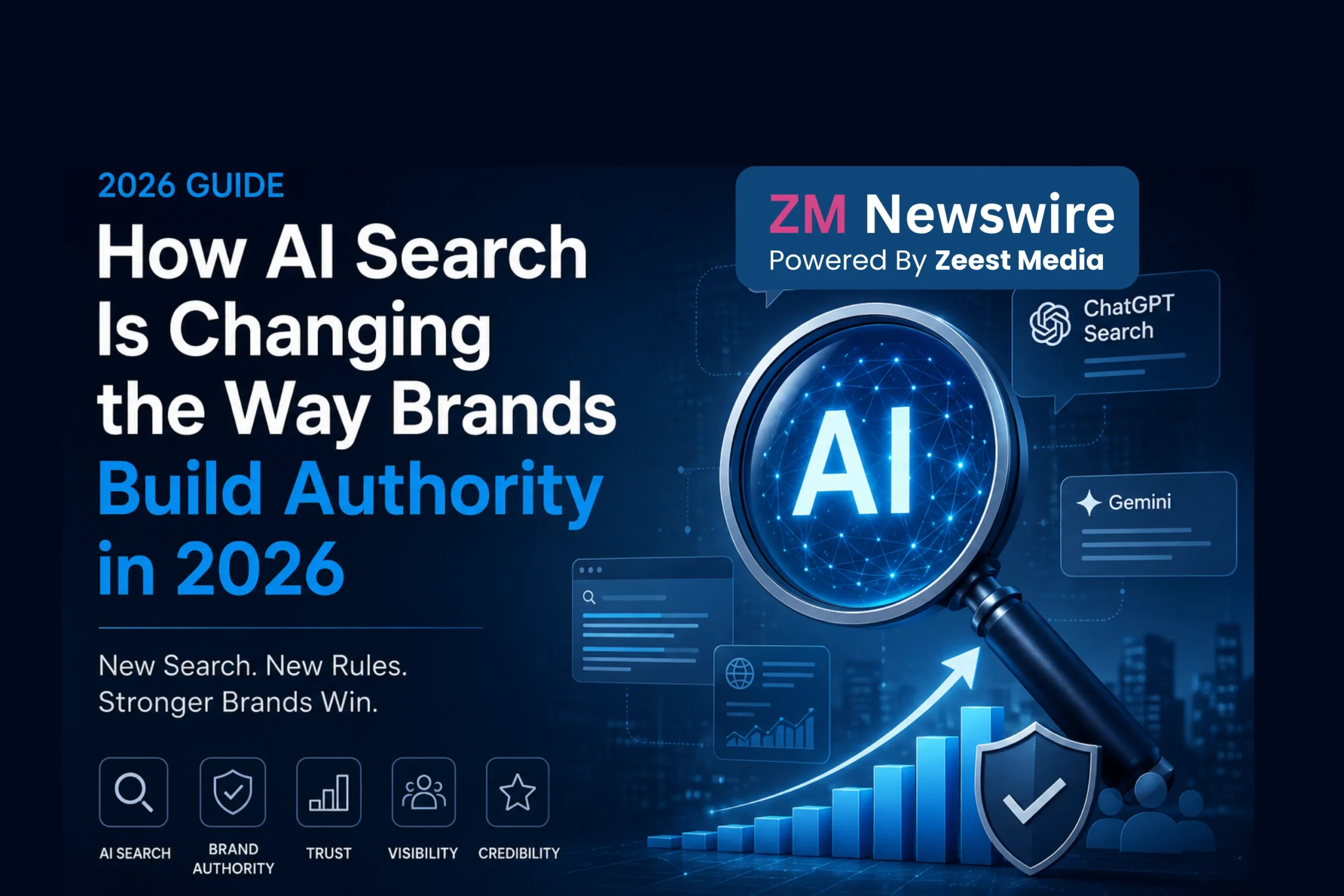
People are increasingly searching through AI-powered experiences such as Google AI Overviews, Google AI Mode, ChatGPT Search, Gemini, and other conversational search platforms. Instead of receiving a page of ten blue links and deciding where to click, users can now ask a detailed question and receive a synthesized answer that draws information from multiple sources. Google says its AI Search experiences are designed to help users explore information and discover relevant websites and original content, while ChatGPT Search can provide answers with links to web sources.
That changes an important question for businesses.
It is no longer only:
“How do I rank my website?”
It is increasingly:
“How do I become a brand that search engines and AI systems recognize, understand, trust, and reference?”
This is where brand authority becomes more important than ever.
Search Is Moving From Rankings to Answers
Traditional search is largely built around retrieving and ranking pages.
AI search adds another layer.
Instead of simply returning a list of documents, an AI-powered search system can interpret a question, retrieve information from different sources, summarize that information, and provide an answer.
For example, imagine someone searches:
“What are the best PR distribution services for a technology startup launching in the United States?”
A traditional search engine might return several websites.
An AI search experience may instead provide a comparison, discuss different options, explain what makes a service suitable for startups, and reference several sources along the way.
That means your company does not necessarily need to be the only answer.
It needs to become part of the information ecosystem that helps produce the answer.
This is a fundamental shift.
Google itself has continued expanding AI Overviews and AI Mode while emphasizing links, original content, and ways for users to discover trusted sources. In 2026, Google also introduced a “Highly Cited” badge intended to help users identify original reporting and influential coverage.
The implication for brands is straightforward:
Being visible in search increasingly means being discoverable across multiple information sources, not simply owning one ranking position.
What Does Brand Authority Mean in the Age of AI Search?
Brand authority is not simply having a high Domain Rating or thousands of backlinks.
Those metrics can be useful, but authority is broader.
A genuinely authoritative brand has a recognizable presence across the web.
Other websites mention it.
Industry publications discuss it.
Customers review it.
Experts reference its work.
The company’s own website clearly explains what it does.
Its executives have identifiable expertise.
Its research produces original information.
Its content answers real questions.
Its business information remains consistent across important platforms.
And, importantly, there is enough independent information available for search systems to understand what the company represents.
Think of it this way:
Your website tells search engines what you say about yourself.
The rest of the internet helps demonstrate what other people say about you.
That distinction becomes particularly important in AI-powered search.
AI Systems Need More Than a Website
One of the biggest mistakes businesses can make in 2026 is assuming that their website alone is enough to establish authority.
Imagine two companies competing in the same industry.
Company A
- Has a modern website
- Publishes 50 generic blog posts
- Has optimized title tags
- Has some backlinks
- Has service pages targeting competitive keywords
Company B
- Has a strong website
- Publishes original research
- Is mentioned by relevant industry publications
- Has expert contributors
- Receives customer reviews
- Publishes useful data
- Has a clear founder and company story
- Earns relevant media coverage
- Maintains consistent information across the web
- Produces detailed content based on real experience
Both companies may have technically optimized websites.
But Company B has something more difficult to manufacture:
a broader body of evidence about its expertise.
That evidence can give search systems more context about the brand.
This does not mean AI systems automatically trust every company with media coverage or backlinks. Nor does it mean there is a secret formula that guarantees an AI citation.
AI-generated answers are probabilistic and can change between queries, models, and time. Recent research into GEO measurement specifically highlights that AI visibility should be measured repeatedly rather than treated as a single fixed ranking.
The lesson is not to chase a single “AI ranking.”
The lesson is to build durable authority signals.
SEO Is Not Dead – It Has Become Part of the Foundation
There is a lot of confusion around GEO.
Some businesses hear about Generative Engine Optimization and assume they need to abandon traditional SEO.
That would be a mistake.
Google has explicitly stated that its AI Search experiences are rooted in existing Search systems and that foundational SEO remains important. Google describes being helpful to users as a continuing principle for visibility in both traditional and AI-powered Search.
So the relationship is better understood like this:
SEO helps search systems discover, crawl, understand, and evaluate your content.
GEO focuses on improving the likelihood that your information is useful and visible within AI-generated answers and conversational search experiences.
The two strategies overlap heavily.
A technically broken website will not become authoritative simply because someone adds a few GEO phrases.
A website full of thin, repetitive content will not become trustworthy because it uses AI-related terminology.
The fundamentals still matter:
- Crawlable pages
- Clear site architecture
- Fast performance
- Useful content
- Strong internal linking
- Relevant external references
- Clear entities and topics
- Good user experience
- Accurate business information
- Original expertise
GEO should build on that foundation, not replace it.
The Rise of the “Entity” Brand
Another important change is the growing importance of entities.
A keyword is a phrase.
An entity is a recognizable thing, organization, person, place, product, or concept.
For example:
“press release distribution”
is a topic.
But:
“Zeest Media”
is a specific organization.
For a brand to build authority, search systems need to understand the relationship between the brand and the subjects it specializes in.
For example:
Zeest Media → press release distribution
Zeest Media → PR
Zeest Media → content marketing
Zeest Media → SEO
Zeest Media → GEO
Zeest Media → media visibility
The stronger and more consistent those relationships become across your website and the wider web, the easier it can be for systems to understand the brand’s position.
This is why businesses should stop thinking exclusively about individual keywords.
Instead, think about:
What should our brand be known for?
Then build content, evidence, and external recognition around those areas.
Original Information Is Becoming a Competitive Advantage
The internet already contains millions of articles explaining the same basic topics.
“Why SEO is important.”
“What is a press release?”
“What is content marketing?”
“How does digital marketing work?”
AI can generate another version of these articles in seconds.
That creates a problem for businesses.
If your content simply repeats information that already exists, why should anyone consider your company an authority?
Original information changes the equation.
Consider what happens when a PR company publishes:
“10 PR Tips for Businesses”
versus:
“We Analyzed 500 Press Releases: These Were the Five Patterns Associated With Stronger Media Engagement”
The second article has something the first usually does not:
firsthand information.
That could come from:
- Internal campaign data
- Customer research
- Industry surveys
- Original experiments
- Case studies
- Expert interviews
- Market analysis
- Proprietary datasets
- Campaign observations
- Before-and-after results
Original research gives other websites something worth referencing.
And when other websites reference your research, your company becomes part of a larger information network.
Google’s recent AI Search updates have specifically emphasized original content and firsthand perspectives.
PR and Earned Media Have a New Role
This is where public relations becomes particularly interesting.
Historically, companies used PR to generate awareness.
A successful campaign might result in:
- Newspaper coverage
- Industry publication mentions
- Interviews
- Articles
- Podcast appearances
- Brand exposure
- Referral traffic
Those outcomes still matter.
But there is another potential benefit in the AI-search era:
third-party evidence about your brand.
Imagine someone asks an AI search system:
“Who are some reputable companies providing press release distribution services?”
The answer may be influenced by information available across the web.
If your company exists only on its own website, there is relatively little independent context.
If your brand has been discussed by relevant publications, included in industry articles, referenced in interviews, and associated with useful original research, there is a broader body of information surrounding the company.
That does not guarantee a recommendation or citation.
But it creates a stronger digital footprint.
This is one reason PR and GEO increasingly belong in the same strategic conversation.
Brand Mentions Matter Beyond Traditional Backlinks
For years, digital marketing conversations have focused heavily on backlinks.
Backlinks remain valuable.
But businesses should not reduce authority to links alone.
A brand can be discussed online without receiving a traditional followed backlink.
For example:
“According to Zeest Media’s recent industry analysis…”
That mention can still contribute to the broader presence of the brand.
Similarly, a journalist may mention a company in an article, a podcast may discuss its research, or an industry publication may quote one of its experts.
These references help create a digital identity around the company.
The important distinction is:
A backlink is a link.
A brand mention is a reference.
A citation in an AI answer is an AI-generated reference to a source.
They are related, but they are not the same thing.
A sophisticated authority strategy should therefore focus on the entire ecosystem rather than chasing one metric.
Your Content Needs to Become Easier to Understand
AI search does not mean you should write for robots.
In fact, the opposite is often more useful.
Write clearly for humans.
Then make the information easy for machines to understand as well.
For example, instead of writing a 1,500-word introduction before answering a simple question, provide the answer clearly and then explain it.
Use:
Clear headings
Short paragraphs
Specific definitions
Examples
Lists
Tables where appropriate
Original statistics
Expert quotes
Step-by-step explanations
Direct answers to common questions
This creates content that is easier for readers to scan and easier for systems to interpret.
The goal is not to make every paragraph artificially “AI optimized.”
The goal is to make your expertise clear, structured, specific, and verifiable.
Stop Publishing Content Just to Fill a Calendar
This may be one of the most important changes businesses need to make.
A company does not necessarily need 100 new blog posts every month.
It needs useful content that strengthens its position.
Consider these two strategies.
Strategy A: Content Volume
Publish:
- 20 generic articles
- 30 AI-written listicles
- 15 rewritten competitor topics
- 10 short definitions
- 10 keyword-focused posts
Strategy B: Authority Building
Publish:
- 4 deep industry guides
- 3 original research studies
- 5 detailed case studies
- 6 expert articles
- 10 practical resources
- Regular company insights
- Relevant media coverage
The second approach may produce fewer pages.
But those pages can have much more value.
Google continues to emphasize helpful, high-quality and original content rather than content created simply to manipulate rankings.
In 2026, businesses should ask:
“What evidence are we adding to the internet?”
Not just:
“How many articles did we publish this month?”
Build Authority Around Topics, Not Just Keywords
Suppose your company provides press release distribution.
You could target hundreds of individual keywords.
Or you could establish deep expertise around the entire subject.
For example, create content covering:
- What is press release distribution?
- How distribution works
- How to write a newsworthy release
- How journalists evaluate announcements
- PR strategy for startups
- PR for product launches
- International press distribution
- Measuring PR ROI
- Media reach
- PR analytics
- Original research
- Crisis communication
- Founder PR
- Thought leadership
- Earned media
- AI and PR
Now your website is not just targeting keywords.
It is building a knowledge ecosystem around a subject.
That is much closer to how a real authority operates.
Your Company Should Have People Behind the Content
One of the easiest ways to make business content feel generic is to remove the people behind it.
AI can write sentences.
It cannot replace firsthand experience.
If your company has professionals who have worked on campaigns, distributed releases, analyzed media coverage, managed content, or worked directly with clients, their knowledge should appear in your content.
Use:
- Author names
- Expert quotes
- Firsthand observations
- Case studies
- Lessons learned
- Real examples
- Methodologies
- Original opinions
Instead of:
“Press releases can be an effective marketing strategy.”
Say something more useful:
“A common mistake we see in PR campaigns is treating distribution as the entire strategy. Distribution can create exposure, but the underlying story, supporting evidence, audience, and follow-up determine whether that exposure becomes meaningful visibility.”
The second statement communicates experience.
That is what modern authority should sound like.
Measure AI Visibility Differently
Traditional SEO reporting often focuses on:
- Rankings
- Organic clicks
- Impressions
- CTR
- Conversions
- Backlinks
Those metrics remain important.
But brands experimenting with AI search should add another layer.
Track questions such as:
Does AI mention our brand?
Which questions trigger our brand?
Which competitors are mentioned instead?
Which sources are cited when our competitors appear?
What does AI say our company specializes in?
Is the information accurate?
Does our brand appear consistently across different AI search platforms?
And don’t judge performance from one query.
Research into GEO measurement shows why: AI answers can vary across prompts, runs, and time, making repeated measurements more meaningful than a single snapshot.
Your objective should be to identify patterns.
A Practical Authority Framework for 2026
For businesses that want to adapt to AI search, a useful framework is:
1. Build a technically strong website
Make sure search engines can access and understand your important pages.
2. Clearly define your expertise
Decide what subjects your brand should be associated with.
3. Publish genuinely useful content
Answer real customer questions instead of writing solely for keywords.
4. Add original information
Use research, data, case studies, experiments, and firsthand experience.
5. Build expert visibility
Give real people within your organization a voice.
6. Earn third-party recognition
Pursue relevant media coverage, interviews, partnerships, reviews, and industry mentions.
7. Keep your brand information consistent
Make sure your company name, services, descriptions, people, locations, and other important details are accurate across relevant sources.
8. Strengthen internal connections
Connect related articles and service pages so users and search systems can understand the relationship between topics.
9. Monitor AI visibility
Test realistic questions across the AI platforms your customers use.
10. Improve based on evidence
Don’t chase every new GEO tactic. Measure what is happening and invest in strategies that create durable value.
The Real Goal Isn’t to “Hack” AI Search
There will always be new tools promising guaranteed AI citations.
There will always be someone selling a new “secret GEO technique.”
Be skeptical.
AI search is evolving quickly. Google itself continues to update how AI Overviews and AI Mode work, while ChatGPT and other AI search products continue to change how people discover information.
That makes short-term tricks particularly fragile.
A better strategy is to build something that remains valuable regardless of which interface people use.
Create a company that:
publishes useful information,
produces original insights,
earns recognition,
demonstrates expertise,
maintains a trustworthy digital presence,
and gives search systems enough reliable information to understand what the brand actually does.
That is much harder than manipulating a ranking.
But it is also much more sustainable.
The Future of Brand Visibility Is Bigger Than Search Rankings
The biggest mistake businesses can make in 2026 is treating AI search as simply another SEO update.
It is broader than that.
The way people discover information is changing.
Someone might find your business through a Google AI Overview.
Another person might discover you through ChatGPT Search.
Someone else might hear about your company through an industry publication, podcast, LinkedIn post, review, or research report.
These channels increasingly connect.
Your website is one part of the picture.
Your media coverage is another.
Your content is another.
Your customers are another.
Your experts are another.
Your research is another.
Together, they create your digital authority footprint.
And that footprint is becoming increasingly important in a world where search engines don’t simply return links – they increasingly try to understand information and provide answers.
Final Thoughts
AI search is changing the rules of visibility, but it isn’t eliminating the fundamentals of good digital marketing.
If anything, it is making them more important.
Brands that want to compete in 2026 should stop asking only:
“How can we rank higher?”
They should also ask:
“What would make an independent system recognize our company as a credible authority on this subject?”
The answer usually isn’t another 500-word blog post.
It is a stronger website.
Better information.
Original research.
Real expertise.
Relevant media coverage.
Consistent brand signals.
Useful content.
And genuine recognition outside the company’s own website.
That is the foundation of modern brand authority.
SEO helps people find you.
GEO helps your information participate in AI-powered discovery.
But authority is what gives your brand something worth discovering.